
What AI Traceability Software Must Prove
AI traceability software gives enterprises proof of how AI acts, accesses data, and affects workflows, with audit-ready control built in.
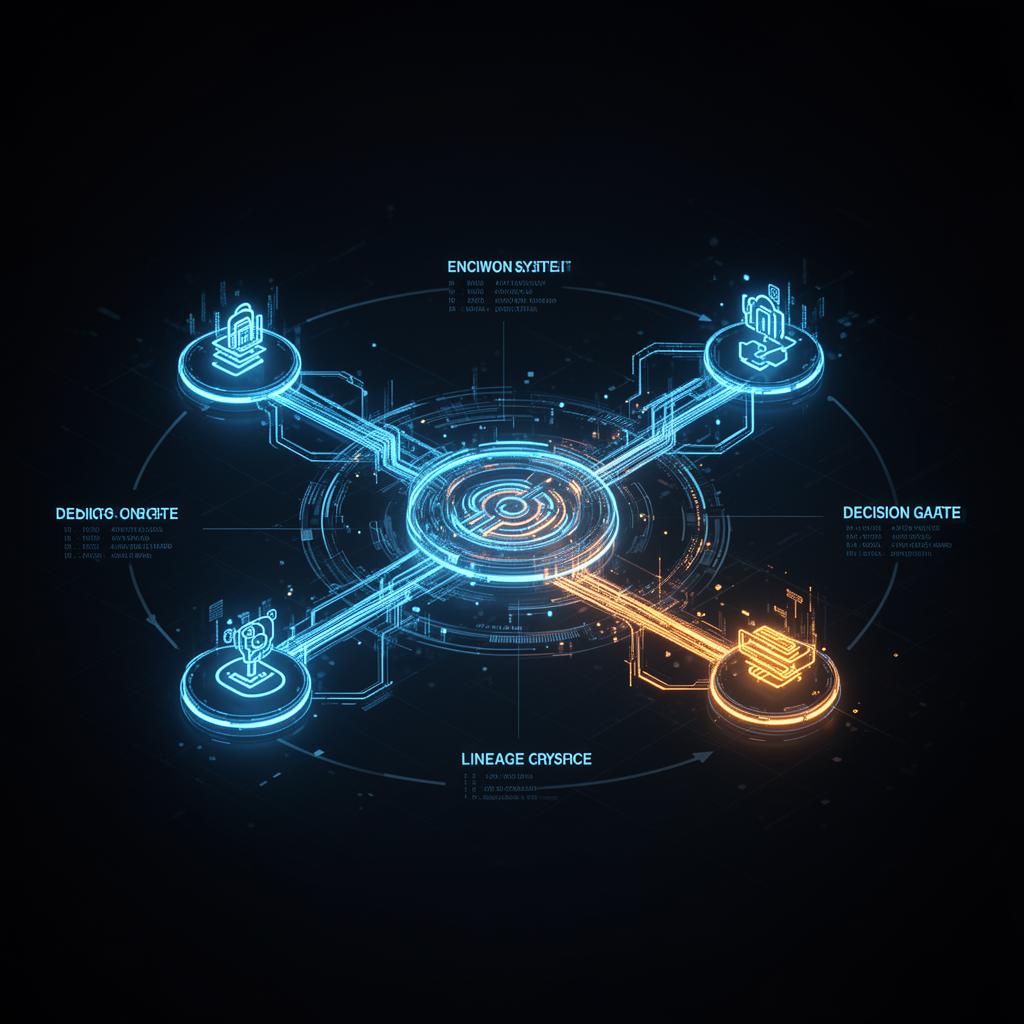
A chatbot that drafts emails is easy to tolerate when it gets something wrong. An AI agent that updates a customer record, changes a delivery status, or triggers a finance workflow is not. The moment AI starts acting inside SAP, CRM, ERP, databases, and internal tools, AI traceability software stops being a nice-to-have and becomes part of the operating model.
That shift matters because most enterprise AI risk does not come from the model alone. It comes from what the model can access, what it decides to do, and whether anyone can prove what happened after the fact. If an AI agent reads sensitive records, calls an API, writes back to a system of record, and hands off a task to a human, leadership needs more than a confidence score. They need evidence.
What AI traceability software actually does
At a practical level, AI traceability software creates a verifiable record of AI behavior across systems, users, data, and actions. It shows which model was used, what inputs were passed, which tools or APIs were called, what outputs were generated, what approvals were triggered, and what changes were made downstream.
That sounds straightforward until you look at how enterprise workflows really work. A single process might span SAP, Salesforce, a warehouse platform, internal databases, document repositories, and email. An agent may gather context from multiple systems, apply business rules, generate a recommendation, and then execute a task through another interface. If traceability only covers the prompt and response, it misses the part that actually creates business risk.
Real traceability must extend beyond model logs. It needs to cover system connectivity, access rights, execution paths, handoffs, and policy enforcement. Otherwise, companies are left with a polished interface and a black box behind it.
Why traceability becomes critical in production
Most AI pilots look safe because they operate at the edge of the business. They summarize meetings, classify documents, or support internal research. The stakes are limited. Once AI moves into production workflows, the stakes change fast.
In logistics, an agent may reprioritize shipments based on inventory and customer commitments. In manufacturing, it may trigger procurement steps from ERP data. In finance, it may support exception handling tied to payment approvals or compliance checks. In each case, the issue is not only whether the answer was good. The issue is whether the company can prove how the decision was formed and what actions followed.
That proof is not just for auditors. It is essential for operations teams, security leaders, and executives who are accountable for business continuity. When a workflow fails, slows down, or produces a disputed outcome, they need to reconstruct events quickly. Which version of the agent ran? Which records did it touch? Did it act within policy? Was there human approval? Without those answers, root cause analysis turns into guesswork.
What good AI traceability software should capture
The strongest AI traceability software does not treat observability as an afterthought. It captures the full chain of execution.
That includes identity and access context, so teams know which user, service account, or agent initiated an action. It includes model context, such as the model version, configuration, and prompt path used at the time. It includes data lineage, so teams can see what enterprise data was accessed and whether sensitive data handling rules were followed. It also includes action logs across connected tools - not just what the model suggested, but what was actually executed in SAP, CRM, ERP, APIs, or internal systems.
There is also a policy layer. In serious deployments, traceability should show where governance rules were applied. That may include approval checkpoints, field-level restrictions, tool access limits, redaction rules, or region-specific data controls. If a platform cannot demonstrate where policy was enforced, it is not delivering control. It is delivering hope.
The common gap: logs without accountability
Many vendors claim traceability because they store chat history or interaction logs. That may help with debugging prompts, but it is not enough for enterprise execution.
A prompt log does not tell you whether an agent accessed customer financial data it should not have seen. It does not show whether an API call wrote inaccurate information back into a system of record. It does not prove whether a workflow included a required approval before an action was taken. These are the questions that matter when AI touches operational processes.
This is where buyers need to be precise. Ask whether the traceability layer spans both reasoning and execution. Ask whether it covers all connected systems, or only the vendor's own interface. Ask whether logs are structured for audit and incident review, or just exposed as developer telemetry. The difference is significant.
AI traceability software and compliance are related, but not identical
Compliance teams care about traceability because it supports auditability, data governance, and policy enforcement. But traceability is broader than compliance.
A company may meet baseline documentation requirements and still lack operational visibility. For example, it may know which model is approved for use, yet have no clear record of how that model interacted with live ERP data during a failed workflow. It may document data processing categories, yet still struggle to explain why an agent made a certain handoff during a customer dispute.
The better way to think about AI traceability software is as infrastructure for controlled execution. Compliance is one outcome. Faster incident response, cleaner governance, and safer automation are equally important outcomes. So is executive confidence. AI gets funded when leaders can see that it operates under control and produces real value, not because it introduces another opaque layer into critical systems.
What to evaluate before you buy
If your organization is moving from AI experimentation to operational deployment, evaluate traceability at the architecture level, not as a reporting feature.
First, look at system coverage. If your workflows run across SAP, Microsoft environments, CRM platforms, databases, and internal APIs, traceability must span that landscape. Partial visibility creates blind spots exactly where risk accumulates.
Second, look at deployment control. For many organizations, especially in regulated industries or data-sensitive environments, hosting and data residency matter. If your AI stack depends on external routing you cannot govern, traceability is already compromised. Sovereign deployment options, including on-premise or controlled regional hosting, are often part of the answer.
Third, look at enforcement. Can the platform do more than observe? The best systems combine observability with policy controls, approval logic, and audit-ready records. That is what moves traceability from passive logging to active governance.
Fourth, look at business usability. A traceability layer is only valuable if operations, IT, security, and compliance teams can use it. If every investigation requires a specialist to parse raw telemetry, the software may be technically sophisticated but operationally weak.
Why this matters for ROI, not just risk
There is a tendency to frame traceability as overhead. In practice, it is one of the enablers of scale.
Enterprises do not expand AI across departments because the demo looked impressive. They expand it when they can trust execution, shorten approval cycles, and resolve exceptions without disrupting the business. AI traceability software supports all three. It reduces the cost of oversight, makes failures easier to diagnose, and gives stakeholders confidence to approve broader automation.
That is especially relevant for small and mid-sized businesses that cannot afford long AI programs with unclear outcomes. They need measurable results in weeks, but they also need to avoid expensive governance mistakes. Traceability helps them move faster without giving up control.
Platforms built for this reality treat traceability, governance, and integration as one system. That is the difference between AI that stays trapped in pilots and AI that handles real process work. This is also why infrastructure-led platforms such as apichap focus on execution inside business systems with no black boxes around access, actions, or audit trails.
The standard is rising
The market is moving past the phase where AI adoption can be justified by novelty. Buyers now ask harder questions. Can the agent act safely inside core systems? Can it be governed across departments? Can the business prove what happened when something changes, fails, or gets challenged?
AI traceability software is the layer that answers those questions with evidence instead of assumptions. For enterprises serious about production AI, that is not a secondary feature. It is part of the foundation.
If your AI strategy includes real workflows, real systems, and real accountability, traceability is where credibility starts.
See sovereign AI in action
Talk to our team about putting governed AI agents into your enterprise workflows.
Book a demo