
ERP AI Automation That Works in Production
ERP AI automation delivers real outcomes when it connects securely to business systems, follows governance rules, and executes with full traceability.
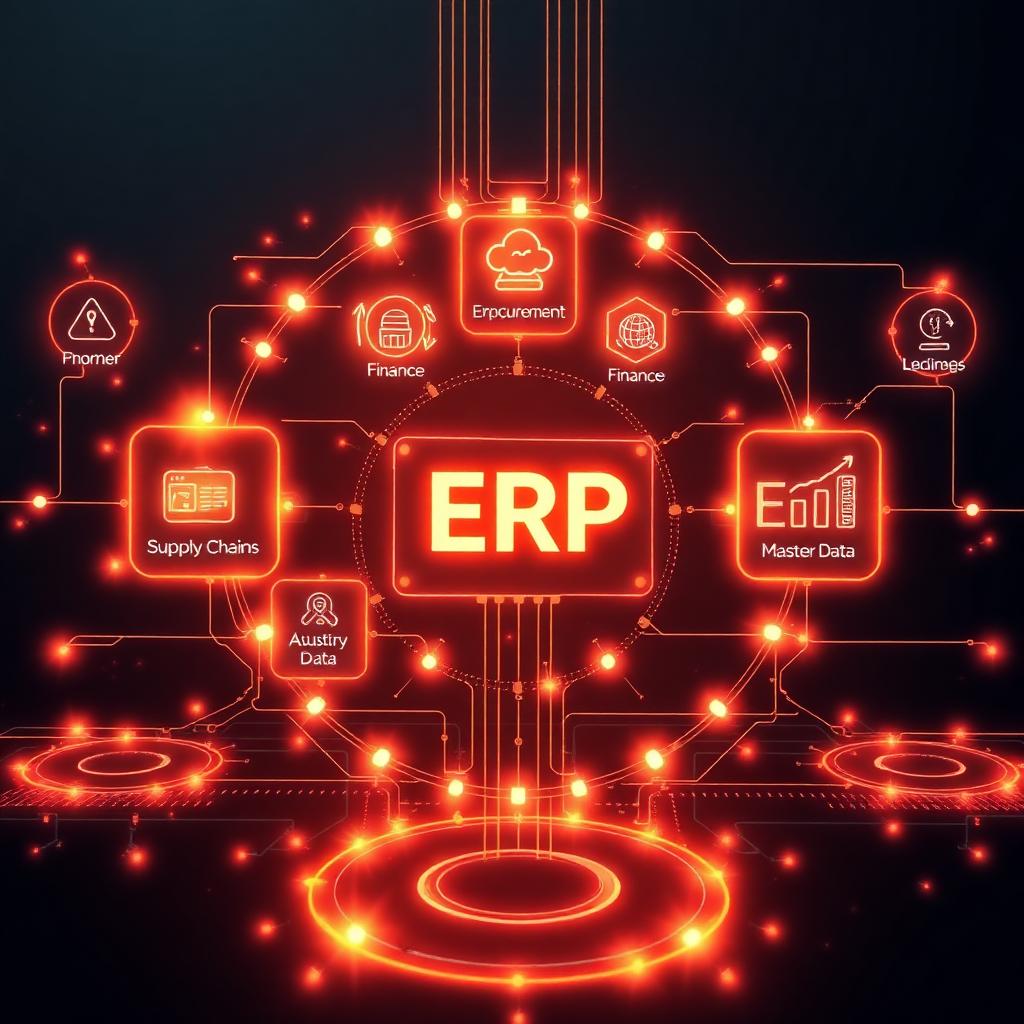
Most ERP projects fail at the same point: not in planning, but in execution. A team identifies a repetitive process, proves that AI can draft an answer or classify a request, then hits the wall of enterprise reality. The model cannot safely update records, trigger approvals, read the right data at the right time, or explain what it did afterward. That is where erp ai automation stops being a demo category and starts becoming an infrastructure decision.
For companies running SAP, Oracle, Microsoft Dynamics, NetSuite, or custom ERP environments, the question is not whether AI can assist people. It can. The real question is whether AI can perform controlled work inside core business processes without creating a governance gap. If the answer is no, the result is more pilot activity, more manual supervision, and very little operational value.
What ERP AI automation actually means
ERP AI automation is not a chatbot sitting beside an ERP screen. It is the use of AI agents and models to execute operational tasks across ERP-driven workflows with system-level access, process logic, and auditability. That distinction matters because most enterprise bottlenecks are not about generating text. They are about moving work across systems with the right permissions, the right business rules, and a complete record of what happened.
In practice, that can mean processing purchase order exceptions, validating invoice data against ERP records, updating order statuses based on logistics events, routing procurement approvals, creating vendor records from structured submissions, or reconciling master data across connected systems. These are not theoretical use cases. They are high-frequency processes where delays, errors, and manual handling create direct cost.
The value comes from execution. If AI cannot read from the ERP, reason over the business context, take an approved action, and log every step, it is not automation in any meaningful enterprise sense.
Why most ERP AI automation efforts stall
The market is full of AI tools that perform well in isolated tests. The failure pattern shows up when organizations try to move from experimentation to production. There are usually three causes.
First, system connectivity is weak or incomplete. An AI model may understand an invoice email, but if it cannot interact with the ERP transaction layer, the user still finishes the job manually. That shifts work instead of removing it.
Second, governance is treated as an afterthought. ERP processes touch financial records, supplier data, customer information, and operational controls. In regulated or process-heavy environments, leaders need to know which model acted, which system it accessed, what data it used, what rule path it followed, and how to intervene if something goes wrong. No black boxes.
Third, business logic is underestimated. ERP workflows are full of exceptions, approval thresholds, role-based restrictions, and company-specific process variations. Generic AI automation often breaks at exactly this point. It performs well on the common path and fails on the cases that actually consume the most time.
This is why many organizations end up with AI that informs work but does not complete it.
The infrastructure ERP AI automation needs
To deliver real outcomes, ERP AI automation needs more than a model endpoint and a prompt. It needs an integration and control layer between the AI and the systems where work happens.
That layer has to connect AI agents to ERP modules, CRM platforms, databases, APIs, document systems, and internal tools. It also has to enforce permissions, monitor actions, log decisions, and support deployment models that fit enterprise security requirements. For many organizations, especially those with GDPR obligations or strict internal governance, sovereignty is not optional. Data location, model choice, and execution boundaries all matter.
This is where architecture decides the business result. A model-agnostic setup gives companies flexibility as model capabilities change. On-premise or EU-hosted deployment supports stricter data control. Observability and auditability make AI usable in workflows that affect revenue, procurement, finance, and operations.
Without that foundation, the company is not implementing ERP AI automation. It is attaching AI to ERP-adjacent tasks and hoping risk stays low enough to ignore.
Where ERP AI automation creates measurable results
The strongest use cases share a common pattern. They involve repetitive decisioning, structured records, frequent exceptions, and process handoffs across teams.
In procurement, AI can validate requisitions, check policy compliance, enrich missing fields, and route requests based on thresholds and supplier rules. That reduces cycle time and cuts the back-and-forth that slows purchasing.
In finance, it can match invoices to purchase orders and goods receipts, flag discrepancies for review, and prepare ERP updates for approval. Here the trade-off is obvious: the more autonomy you want, the stronger the controls must be. Many finance teams start with human-in-the-loop approval, then expand autonomy once traceability and exception handling are proven.
In supply chain operations, ERP AI automation can monitor order changes, inventory signals, and logistics updates, then trigger downstream actions across ERP and connected planning tools. This is especially useful where teams are still copying status changes between systems or relying on email to move operational decisions forward.
In master data management, AI can interpret incoming requests, validate record completeness, compare against existing entities, and create or update records under clear governance policies. That helps address one of the most persistent enterprise issues: bad data entering core systems through manual processes.
The outcome is not just time savings. It is lower error rates, faster process completion, cleaner records, and more predictable execution.
How to evaluate an ERP AI automation platform
Leaders should evaluate ERP AI automation the same way they evaluate any production infrastructure: by control, interoperability, and business impact.
Start with connectivity. Can the platform work directly with your ERP environment, your CRM, internal databases, APIs, and document sources? If the answer depends on custom one-off scripts for every workflow, scaling will be slow and expensive.
Then look at governance. Can you define which agent can access which system, under what conditions, with what approvals? Is every action logged? Can teams inspect prompts, tool calls, outputs, and execution history? If not, operational trust will collapse as soon as the automation touches a critical workflow.
Next, test deployment options. Many organizations cannot send sensitive process data into uncontrolled external environments. Sovereign hosting, on-premise deployment, and clear data handling policies matter because they determine where AI can be used, not just how well it performs.
Finally, ask for proof of execution. Not presentations. Not generic demos. Ask to see a workflow that reads enterprise data, applies process logic, takes action in a business system, and produces a complete audit trail. That is the difference between AI theater and production automation.
ERP AI automation is not all-or-nothing
A common mistake is assuming the only worthwhile target is full autonomy. In reality, the best implementations often begin with bounded execution.
An agent might prepare a vendor creation request, validate fields against ERP policy, and route the result to a human approver. Another might reconcile invoice data and recommend actions without posting entries directly. These designs still create real value because they remove low-value manual work while preserving control where it matters most.
Over time, companies can expand autonomy by process segment. Stable, high-volume tasks with low exception risk are natural candidates for straight-through execution. More sensitive workflows may retain approval gates indefinitely. That is not a weakness. It is good operational design.
The point is to match autonomy to risk, not to chase full automation for its own sake.
What a strong rollout looks like
The fastest path to value is usually one process, one owner, one measurable target. Choose a workflow with clear volume, visible friction, and known system dependencies. Define the current baseline for cycle time, manual touches, and error rates. Then automate the steps that actually consume effort rather than the steps that are easiest to demonstrate.
This is where infrastructure-led platforms stand out. Instead of building disconnected agents around isolated tasks, they provide the control layer needed to connect AI to production systems safely. That is how organizations move from proving that AI can respond to proving that it can execute.
For companies that need AI to work inside SAP, CRM, ERP, APIs, and internal tools with full traceability, that infrastructure is the real product. Platforms like apichap are built around that exact requirement: secure connectivity, governance, observability, and measurable results in weeks rather than another round of pilots.
ERP AI automation is worth pursuing when it does real process work, under real controls, inside the systems your business already depends on. The companies that get value are not the ones with the loudest AI strategy. They are the ones that treat execution, compliance, and traceability as the starting point.
See sovereign AI in action
Talk to our team about putting governed AI agents into your enterprise workflows.
Book a demo